
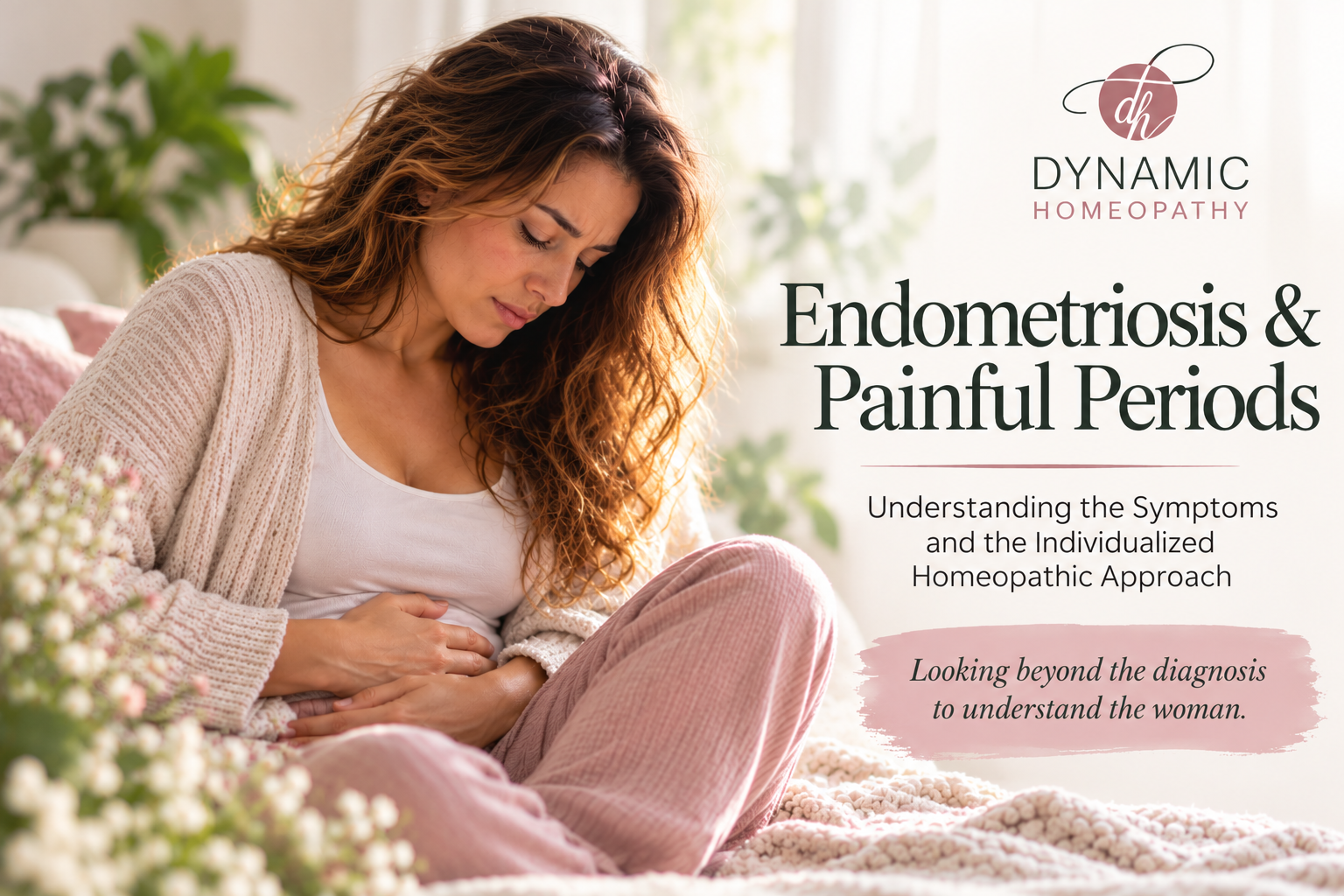
Endometriosis and Painful Periods: When Your Period Becomes Something You Dread
Living with endometriosis and painful periods can mean anticipating pain long before bleeding begins. Do you find yourself looking at the calendar and counting the days until your next period—not because you’re trying to track your cycle, but because you’re anticipating the pain?
Do you plan your work, social commitments, travel or family activities around the days you know you’ll struggle?
Perhaps you’ve become accustomed to carrying pain medication everywhere. Maybe you need a heating pad just to get through the evening. Or perhaps you’ve learned to smile, carry on and tell people you’re fine, even when you’re anything but.
And then there is the exhaustion. The kind that doesn’t necessarily disappear after a good night’s sleep. The kind that makes everyday responsibilities feel heavier, especially when you’re trying to function through persistent pelvic discomfort.
For some women, there is also a quiet emotional burden: frustration, anxiety, disappointment and the feeling that their own body has become unpredictable.
If this sounds familiar, your experience deserves more than being dismissed as simply having difficult periods.
Endometriosis can affect far more than menstruation. It can influence how you sleep, work, move, connect with your partner, approach intimacy, think about fertility and feel about your body. And when these difficulties continue month after month, they can begin to shape your entire life.
What Is Endometriosis, and Why Can It Be So Difficult?
Endometriosis is a condition in which tissue similar to the lining of the uterus grows outside the uterus, often within the pelvis. These growths can contribute to inflammation, scarring and pain. Symptoms may change throughout the menstrual cycle, although some women experience discomfort well beyond their periods.
Common experiences include:
- Severe menstrual cramps that interfere with daily activities
- Pelvic pain before, during or between periods
- Pain during intercourse
- Painful bowel movements or urination, particularly around menstruation
- Bloating, nausea or digestive disturbances
- Heavy or irregular menstrual bleeding
- Persistent fatigue
- Difficulty conceiving
What makes endometriosis particularly challenging is that the severity of symptoms doesn’t always correspond to the extent of the disease.
One woman may have significant pain with relatively limited visible disease, while another may have extensive endometriosis with surprisingly few symptoms. And not every woman experiences endometriosis in the same way. This individuality matters.
When You’re Told to Manage the Pain and Carry On
One of the most difficult parts of living with endometriosis can be the journey toward being heard and understood.
Some women spend years seeking an explanation for their symptoms. They may have been told that painful periods are normal, that they have a low pain tolerance or that menstrual discomfort is simply part of being a woman.
When endometriosis is suspected or diagnosed, treatment options often include pain medication, hormonal contraception or other hormonal therapies intended to reduce symptoms. Depending on the circumstances, surgery and specialist care may also be considered.
These treatments can provide meaningful relief, and some women do very well with them. But other women find themselves asking:
What if I don’t want to take hormonal medication?
What if the symptoms return when I stop treatment?
What about the fatigue, emotional changes and other difficulties that don’t seem to be addressed?
Is there an approach that considers me as a whole person, rather than focusing only on controlling individual symptoms?
These are reasonable questions. Endometriosis is a complex condition, and there is no single treatment that works equally well for everyone. Hormonal therapies can suppress symptoms and reduce disease activity, but they do not necessarily eliminate the condition. Surgery may help in selected cases, although symptoms can recur.
For women seeking a broader approach to their wellbeing, individualized care can offer an important additional dimension.
Endometriosis and Painful Periods: The Individualized Homeopathic Perspective
In classical homeopathy, the diagnosis is important—but it is not the whole story.
When a woman comes to my practice with endometriosis, I want to understand much more than the fact that she has pelvic pain. I want to know how she experiences that pain.
Is it sharp, stabbing, pulling or cramping? Does it radiate into her back or thighs? Is it worse before bleeding begins, or does it intensify once her period arrives? Does warmth bring relief? Does movement make it worse?
I also want to understand what happens throughout the rest of her cycle. Is there bloating? Breast tenderness? Changes in bowel habits? Headaches? Sleep disturbances? Irritability or tearfulness before menstruation?
And then we look beyond the menstrual cycle. How is her energy? How does she respond to stress? Has she noticed changes in her emotional wellbeing since her symptoms began? Does she feel overwhelmed, frustrated, withdrawn or constantly on edge?
Two women may share the same diagnosis, yet their overall symptom patterns and experiences can be remarkably different.
This is why homeopathic treatment is individualized rather than based on the name of the condition alone.
How Homeopathy Fits Into a Healing Journey
My approach to homeopathy is rooted in the understanding that physical symptoms, emotional wellbeing and a person’s overall state of health are interconnected.
Rather than selecting a remedy solely because someone has endometriosis, I consider the complete pattern of symptoms and the individual’s response to what she is experiencing.
In my clinical experience, women often seek homeopathic care because they want to explore more than temporary symptom management. They want to feel better in themselves—to have greater comfort, more energy, improved sleep and a sense that their wellbeing is being considered as a whole.
Homeopathic treatment is intended to support the individual, and I follow changes over time rather than judging progress by a single symptom. That may include looking at menstrual discomfort, sleep, energy, emotional resilience and the woman’s overall sense of wellbeing.
I believe there is value in creating space for this kind of individualized healing work, particularly when a woman has spent years feeling that her symptoms have become the defining feature of her life.
The Emotional Weight of Living With Chronic Pelvic Pain
There is another aspect of endometriosis that deserves attention: the emotional toll of living with a condition that can be both painful and unpredictable.
Perhaps you’ve had to cancel plans so often that you’ve stopped making them. Perhaps intimacy has become associated with discomfort or anxiety. Perhaps you’re worried about fertility, or frustrated that you have to explain your symptoms repeatedly to people who cannot see what you’re experiencing.
Some women begin to question themselves.
Am I overreacting? Should I be coping better? Why does something that seems so natural for other women feel so difficult for me?
These feelings deserve recognition. Chronic pain can affect mood, concentration, relationships and sleep. Emotional distress can, in turn, make living with persistent symptoms even more difficult.
In a homeopathic consultation, these experiences are not treated as irrelevant details. They help me understand the person living with the condition.
What Does Meaningful Progress Look Like?
Healing is not always experienced as one dramatic change. Sometimes women first notice that they are sleeping more comfortably, coping better emotionally or feeling less overwhelmed by their symptoms. Other times, they may become more aware of patterns in their cycles and what influences their wellbeing.
I encourage women to observe their symptoms over time, including menstrual patterns, pain intensity, energy, sleep and emotional changes. These observations can be valuable both in homeopathic follow-up consultations and in conversations with their medical providers.
The goal is to understand the whole picture—not to overlook important symptoms or assume that every change has the same cause.
When to Seek Further Medical Assessment
If your periods are consistently painful enough to interfere with your life, or you experience persistent pelvic pain, painful intercourse, heavy bleeding or difficulty conceiving, it is worth discussing these concerns with a qualified medical professional.
Sudden severe pelvic pain, especially with fainting, fever or possible pregnancy, requires urgent assessment. You do not have to accept debilitating pain as an inevitable part of being a woman.
You Deserve to Be Seen Beyond Your Symptoms
If you’ve been living with endometriosis, you may have spent a long time adapting your life around your symptoms. But your experience is about more than pain.
It’s about the energy you want to have for your family, your work and yourself. It’s about feeling comfortable in your body. It’s about being able to make plans without wondering whether your next cycle will disrupt them.
And it’s about having someone take the time to understand your individual experience.
At Dynamic Homeopathy, I offer individualized virtual consultations that explore your physical symptoms, emotional wellbeing and overall health together.
If you’re looking for a thoughtful, whole-person approach to your wellbeing, you’re welcome to explore homeopathic care for women or book a consultation.