
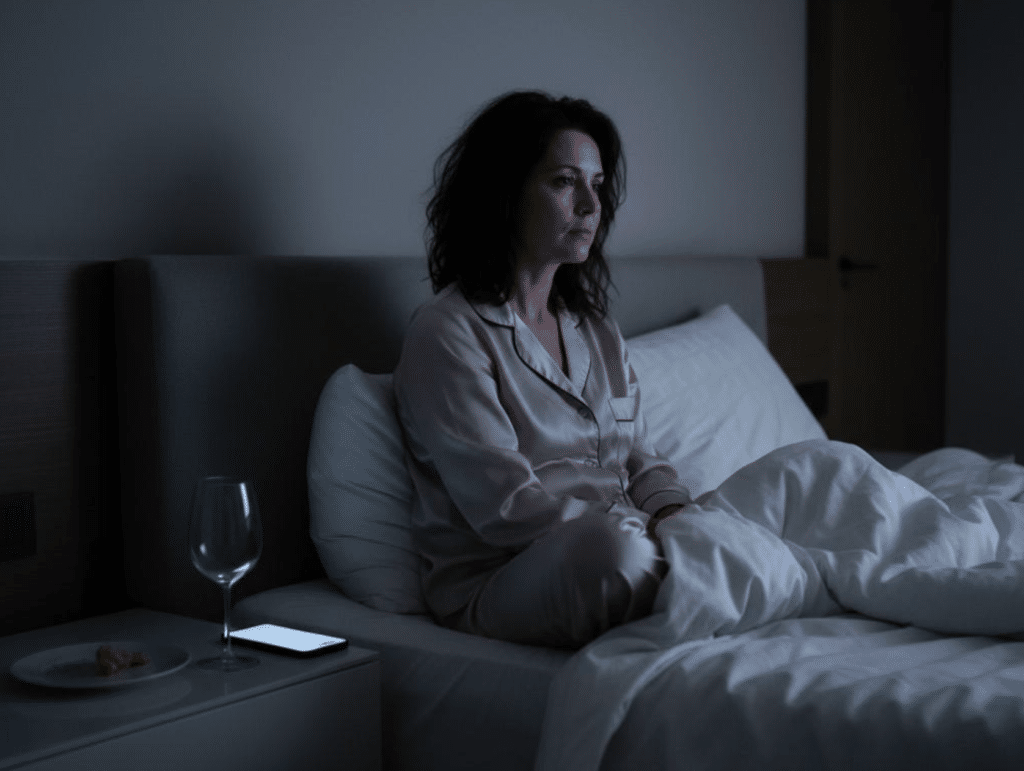
You’re tired. You know you need sleep. But somehow, your body has other plans.
For many women, perimenopause insomnia can show up as difficulty falling asleep, waking repeatedly through the night, or suddenly finding yourself wide awake at 2 or 3 a.m. Maybe you’re tossing off the covers because you’re too hot, only to pull them back on minutes later. Or perhaps you feel completely exhausted all day, yet the moment your head hits the pillow, sleep disappears.
Sleep changes are common during perimenopause. Shifting hormones, hot flashes and night sweats can contribute, but so can stress, anxiety, mood changes and the many physical and emotional changes that can accompany this stage of life.
In homeopathy, however, insomnia isn’t usually approached simply as “insomnia.”
Two women may both wake at 3 a.m. every night and have very different experiences surrounding that waking. Those differences can matter when considering an individualized homeopathic remedy.
Here are seven remedies traditionally considered in homeopathy for different patterns of sleeplessness.
1. Coffea Cruda — Tired, But the Mind Won’t Switch Off
You desperately want to sleep, but your mind seems to have become more awake.
Thoughts may race from one subject to another. Ideas, conversations or plans replay in your head. Even positive excitement can leave you unable to settle.
The traditional Coffea picture may include:
-
- An unusually active or alert mind at bedtime
-
- Difficulty falling asleep despite feeling tired
-
- Heightened sensitivity to noise, touch or other sensations
-
- Sleeplessness after excitement or emotional stimulation
-
- Thoughts that seem impossible to turn off
The important feature isn’t simply being awake. It is the sense of mental overactivity and heightened sensitivity despite needing rest.
Read more: Understanding Fear, Anxiety, Anger & Sadness Through a Homeopathic Lens
2. Sepia — Exhausted, Irritable and Wanting Space
Sepia is one of the remedies frequently discussed in traditional homeopathic literature in relation to hormonal transitions.
The woman who fits this picture may feel profoundly depleted. Sleep disturbance can exist alongside irritability, emotional flatness or a strong desire to be left alone.
Things that would normally feel manageable may suddenly feel like another demand.
The traditional Sepia picture may include:
-
- Exhaustion and feeling worn down
-
- Irritability toward loved ones
-
- Wanting solitude or space
-
- Feeling emotionally disconnected or indifferent
-
- Hot flashes or night sweats
-
- Other menstrual or hormonal changes
-
- Sometimes feeling noticeably better from vigorous exercise or movement
This is a good example of why the whole picture matters. If Sepia is considered, it isn’t simply because a woman has insomnia during perimenopause.
3. Lachesis — Hot, Restless and Worse After Sleep
For some women, nighttime problems revolve around heat.
They may throw the covers off, feel intensely hot or become uncomfortable with anything tight around the neck or waist. Sleep itself may sometimes leave them feeling worse rather than refreshed.
The traditional Lachesis picture may include:
-
- Hot flashes and night sweats
-
- Feeling particularly hot at night
-
- Difficulty tolerating tight clothing or pressure
-
- Restlessness during sleep
-
- Waking feeling worse
-
- Intense or rapidly flowing thoughts and emotions
Again, hot flashes alone don’t automatically indicate Lachesis. The accompanying characteristics help distinguish one remedy picture from another.
4. Nux Vomica — Waking With a Busy, Driven Mind
Sometimes the body is in bed but the nervous system seems determined to keep working.
Nux vomica is traditionally associated with people who are driven, tense, easily irritated or mentally occupied by responsibilities.
You may wake during the night and immediately begin thinking about tomorrow: what needs doing, what went wrong yesterday, the conversation you need to have, or the problem you haven’t solved yet.
The traditional Nux vomica picture may include:
-
- Difficulty switching off from work or responsibilities
-
- Waking during the early hours
-
- Irritability from interrupted sleep
-
- Sensitivity to noise, light or disturbance
-
- Feeling tired but unable to relax
-
- A generally driven or tense state
The insomnia is part of a larger state of being unable to fully come down from alertness.
5. Pulsatilla — Restless Sleep With Emotional Sensitivity
Pulsatilla presents quite differently.
Rather than wanting everyone to leave her alone, a woman fitting this picture may particularly value reassurance, closeness or emotional support.
Symptoms may also feel changeable — including moods, physical sensations and sleep patterns.
The traditional Pulsatilla picture may include:
-
- Emotional sensitivity or tearfulness
-
- Desire for comfort and reassurance
-
- Restless or changeable sleep
-
- Feeling worse in warm, stuffy rooms
-
- Feeling better with cool or fresh air
-
- Changing hormonal or menstrual symptoms
This contrast is important.
A woman who is exhausted and wants everyone away from her presents very differently from a woman who feels vulnerable and wants someone nearby — even though both may describe themselves as “emotional and unable to sleep.”
6. Ignatia — Sleep Disturbed by Grief or Emotional Stress
Sometimes insomnia begins around an emotional event.
A loss, relationship change, disappointment, shock or period of intense emotional strain can leave the body exhausted while the emotional system remains unsettled.
Ignatia is traditionally associated with certain patterns following grief, disappointment or acute emotional stress.
The traditional Ignatia picture may include:
-
- Sleeplessness following emotional upset
-
- Replaying events or conversations
-
- Sighing frequently
-
- A sensation of tightness or a lump in the throat
-
- Emotional reactions that may feel contradictory or change quickly
-
- Difficulty relaxing after grief or disappointment
Perimenopause doesn’t happen separately from the rest of life. For many women, hormonal change arrives during years already filled with changing relationships, caregiving, work pressures, ageing parents or children becoming more independent.
Sometimes the context surrounding the insomnia matters just as much as the insomnia itself.
7. Cocculus — Exhausted From Lost Sleep
Cocculus brings us to another very different picture: sleep deprivation itself.
This remedy is traditionally associated with exhaustion following prolonged loss of sleep — particularly when someone has spent nights caring for another person or has repeatedly been unable to get restorative rest.
The traditional Cocculus picture may include:
-
- Profound tiredness from lack of sleep
-
- Feeling weak or depleted
-
- Dizziness or light-headedness
-
- Nausea accompanying exhaustion
-
- Increased sensitivity from sleep deprivation
-
- Feeling unable to recover despite desperately needing rest
This can be especially relevant when interrupted sleep has accumulated over weeks or months and the effects are now being felt throughout the day.
Seven Remedies. One Symptom. Seven Very Different Pictures.
This is one of the things I find most important about individualized homeopathy.
Imagine seven women sitting together saying:
“I can’t sleep anymore.”
One can’t turn off her thoughts.
One is exhausted and wants everyone to leave her alone.
One wakes drenched in sweat and can’t tolerate the covers.
One wakes thinking about everything she needs to accomplish tomorrow.
One feels emotionally vulnerable and wants reassurance.
One hasn’t slept properly since an emotionally difficult event.
And one is simply depleted after months of interrupted sleep.
The diagnosis may be the same: insomnia.
The lived experience isn’t.
And that difference is something homeopathy pays attention to.
So Which Homeopathic Remedy Should You Take?
A remedy list can help you understand how homeopathic remedies are traditionally differentiated, but it can’t replace an individualized assessment.
One symptom rarely tells the whole story.
During a consultation, I may want to understand questions such as:
-
- When did your sleep change?
-
- Is falling asleep difficult, or is staying asleep the problem?
-
- What time do you typically wake?
-
- What happens mentally and physically when you wake?
-
- Are hot flashes or night sweats involved?
-
- Have your moods changed?
-
- What makes your symptoms better or worse?
-
- What else changed around the time your sleep changed?
Your sleep may be one expression of a broader pattern involving hormonal changes, energy, emotions, digestion, temperature, menstrual changes and how your body responds to stress.
That’s why individualized homeopathic care looks beyond simply finding “a remedy for insomnia.”
It looks at the person experiencing it.
When Sleepless Nights Become Part of a Bigger Picture
Perimenopause can affect much more than your menstrual cycle.
Changes in sleep, mood, anxiety, energy and temperature can occur during this transition, and persistent sleep problems deserve proper medical evaluation — particularly when they are severe, new, worsening or affecting your ability to function.
Homeopathy should not replace appropriate medical assessment or treatment. It can be used as a complementary approach by people who choose to incorporate it into their care.
If you’ve been trying to choose remedies based on individual symptoms and aren’t sure what fits your experience, an individualized homeopathic consultation allows us to look at the larger pattern together.
Curious whether individualized homeopathy might be right for you?
You can book a free inquiry call with Dynamic Homeopathy to learn more about the consultation process and ask any questions before deciding whether you’d like to proceed.